
Forensic Medicine & Toxicology
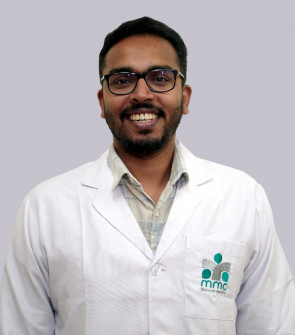
Doctors





About the Department
The Department of Forensic Medicine plays a vital role in bridging the fields of medicine and law. The department is dedicated to imparting comprehensive knowledge of Forensic Medicine to undergraduate medical students, enabling them to understand the medico-legal responsibilities associated with medical practice and patient care.
The department provides academic training in various branches of Forensic Medicine including Medical Jurisprudence, Forensic Pathology, Toxicology, and Clinical Forensic Medicine. Students are trained to identify, analyze, and interpret medico-legal aspects encountered in clinical practice while adhering to ethical and legal standards.
The teaching program is designed to equip future medical professionals with practical knowledge related to injury assessment, death investigation, poisoning, sexual offences, age estimation, and legal procedures associated with medical documentation and evidence handling. The department also emphasizes the importance of professional ethics, patient rights, and the legal responsibilities of medical practitioners.
The faculty members are committed to delivering quality medical education through interactive teaching methods, practical demonstrations, seminars, and case-based discussions. The department actively encourages academic development, critical thinking, and research-oriented learning among students.
With a strong focus on academic excellence and professional integrity, the Department of Forensic Medicine strives to prepare competent medical graduates capable of handling medico-legal challenges responsibly and effectively in their future clinical practice.
Departmental Focus
- Qualified and dedicated faculty.
- Theory classes, practical demonstrations, seminars, discussions and assignments and class tests for MBBS students are taken as per KUHS Syllabus
- Achieving the aims and objective of medicolegal autopsy.
- Familiarize with the laws related to medical profession and the recent developments in it.
- Recognise the rights and duties of a medical practitioner.
- Preserve the necessary material objects of evidentiary value and dispatch them to the appropriate laboratory as per the rules and keeping up the chain of custody.
- Examinations of medicolegal cases and perform medicolegal duties related to them, including documentation
- Interpret the results of laboratory examination, correlate them with the clinical and autopsy data and furnish opinion.Prepare and issue various forms of reports or certificates as required by the law.
- Work with Police, Forensic scientists and other functionaries in the investigation of crime and administration of justice.
- Render medical evidence in the court of law as expert witnesses.
- Realise one’s own limitation of knowledge and seek help from appropriate sources whenever necessary.
- Assist in diagnosing & treating common emergencies in poisoning & manage chronic toxicity.
- Be aware of the general principles of environmental, occupational and preventive aspects of toxicology.
- Understand the working of the judiciary system and its role in the administration of justice.
Infrastructure
- Demonstrations of autopsy to the students at the nearest centre.
- The department also has a state of art museum having a wide collection of articles in the form of weapons, poisons, charts, models, wet specimens, X rays, autopsy instruments, photographs, bones, catalogues etc providing an ideal platform for learning.
- Student enrichment programmes like Seminar, Assignment, Group discussion, etc., are conducted in the department frequently.
- Well equipped infrastructure including equipments and instruments related to research and examination of medico-legal evidences.
- Collaboration with other department in implementing integrated teaching.
- Above all, we maintain a student friendly atmosphere in the department.
Activities
- Anti- Drug Abuse Talk - July 2026
- CME on Child Physical Abuse - July 2026
- Road Etiquette Awareness Class - May 2026
- Cyber Sexual Crime Awareness Program -17 April 2026
- National Forensic Medicine Day - 2026
- World Kidney Day - 2026
- World Suicide Prevention Day - 2025
- Educational Visit by School Students - 21 Aug 2025
- Organ Donation Day - 2025
- Autopsy Visit Report- MBBS (Batch 2022)
- World No Tobacco Day - 2025
- National Forensic Medicine Day - 2025
- Murder Mystery Game 2.0
- National Forensic Medicine Day - 2024
- A Talk on Current Scenario of Organ Transplantation in Kerala
- Fundamentals of Cyber Security - Awareness Programme
- Mystery Murder Game 1.0